

Seattle’s Fight Against Sprawl, 20 Years On
.
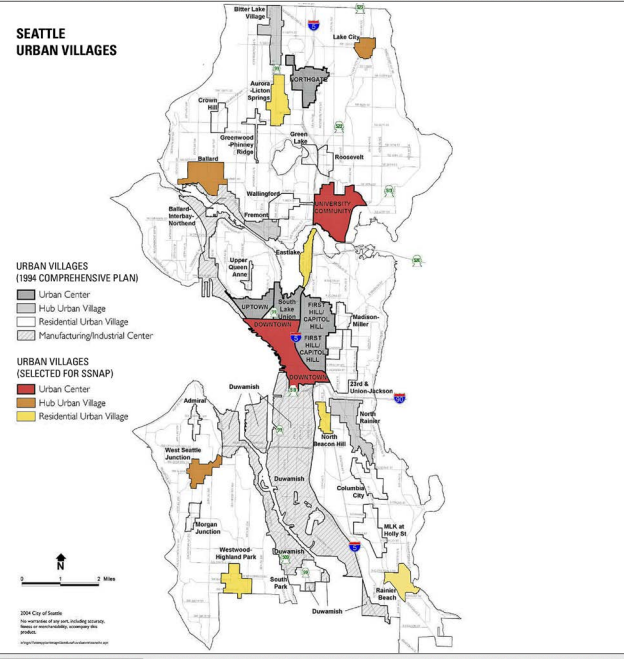
In 1992, then-Mayor Norm Rice announced a strategy to reduce urban sprawl in Seattle. The idea was to channel future growth into so-called “urban villages”: walkable, affordable sections of the city that contained residential, commercial, and recreational structures. Now, 20 years after that plan’s implementation in 1994, a new report says that it has been successful.
Well, mostly.
“The goal of directing the growth to the villages—spot on,” says Peter Steinbrueck, the former Seattle city council member whose firm was commissioned to conduct the research. “What it didn’t accomplish was equitable distribution.”
.
.
… while urban villages seem to have exceeded their growth targets, others fell short of neighborhood targets, says Steinbrueck. Neighborhoods like North Beacon Hill and Westwood-Highland Park—areas with a majority of non-white residents—saw very small increases in population. Other areas, like Lake City, saw disproportionate growth (85 percent) in residents.
.

Ballard
.





