
So argues Yoram Bauman at Sightline:
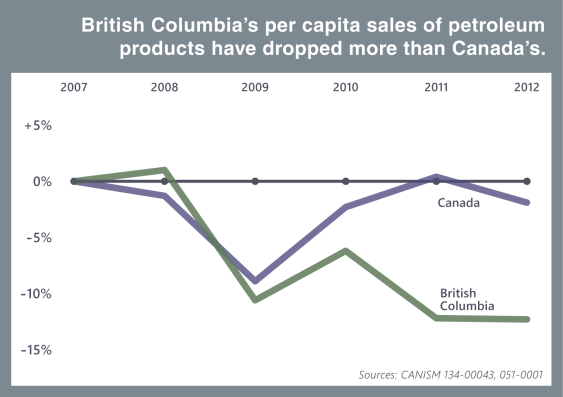
How much of the reduction in petroleum consumption in British Columbia (see graph below) is caused by Canadians filling up south of the border?
The answer: not much.
.

.
It turns out that there are a host of other factors that affect the cross-border gasoline market, including exchange rates, regulations, other taxes unrelated to the carbon tax, and even the ease of crossing the border. …
As for gas prices, the figure below shows ten years of gas price differentials between British Columbia and Washington State; on average gas has been about $1 a gallon more expensive in BC, and it’s currently more expensive by about $1.25. The impressive line at the top shows how much of that spread is the result of factors completely unrelated to the BC carbon tax:
.

.
Yoram delves way deeper here – so if you’re going to comment, take a read first.





One can’t really single out the carbon tax, there are plenty of other gas taxes driving up the cost here vs, in Whatcom county. I imagine most posters here are relatively close to the downtown core. A few regular trips to the border crossings would be an eye opener.
The Translink tax is 5 times greater than the carbon tax.