

Since the quiz below doesn’t include the Mexico City Metro, here’s the map:
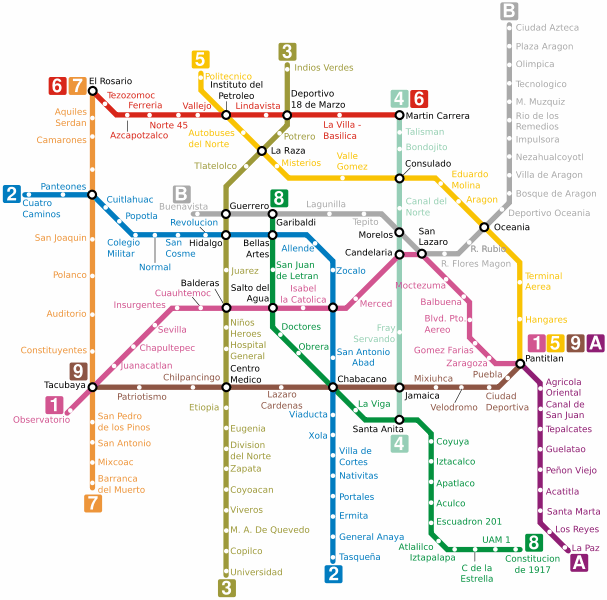
 It looks comprehensive. According to Wikipedia, the Mexico City Metro is the second largest metro system in North America after the New York City Subway. In 2012, the system served 1.609 billion passengers, placing it as the eighth highest ridership in the world.” The first train started service in 1969, with the latest, Line 12, opening in 2012.
But unfortunately, given the size of the metro area, it doesn’t provide sufficient coverage or transfer stations, particularly on the west side of the city where status and safety issues also discourage its use. Our experience: safe, clean, frequent, and packed in rush hours of course. But the Orange 7 line that serves Polanco has only one stop for the neighbourhood, and not near the major shopping and office complex.
Since it opened in about 1985, it does have a small gallery of other metro systems that developed around that time. Like guess which?

.
Notice the fares: $1.5o for Zone 1, $2.50 for Zone 2 and $3 for Zone 3.

If those fares had kept up with inflation, they’d be $2.95, $4.90 and $5.90 today.
.
Another nice touch: bike racks within the stations and tracks for the stairs.


.
Of course we were warned about pick-pocketing and other crimes, though our experiences were uneventful. But then we weren’t in the eastern parts of the region, where even our presence might have been exceptional. Like other large metro areas, Mexico City has its own culture of the subway, as illustrated here in the Vice story on “The Subway Gangs of Mexico City” – though not the type of gangs you might be thinking of.





Those fares were most definitely not from 1985. My guess is the late nineties. Anyone know?