

Cheeying Ho of Smart Growth BC has an op-ed in today’s Vancouver Sun. It’s a response to the ecodenialists:
Cheryl Savchenko’s Aug. 14 column Eco-density is a thin concept raises some important concerns, but unfortunately fails to understand the key role that well-planned and well-designed density plays in creating more livable, environmentally sound neighbourhoods.
I like that point: density can result in better neighbourhoods if it’s done well.
Ecodenialists are essentially making an argument for sprawl: green is good, and more is better. Nor can we sacrifice any of our green space to accommodate others. Let them plough over green space somewhere else.
In theory, green space is perfectly compatible with increased density. Go no further than False Creek, where new urban parks have replaced polluted industrial lands. But that requires taller buildings on tighter footprints – and the highrise is anathema to the low-density neighbourhoods most fearful of Ecodensity.
Highrises, however, are not necessary. Infill development can beautifully complement the existing fabric of our neighbourhoods, as lane housing in Mount Pleasant or rowhouses in Grandview illustrate so well.
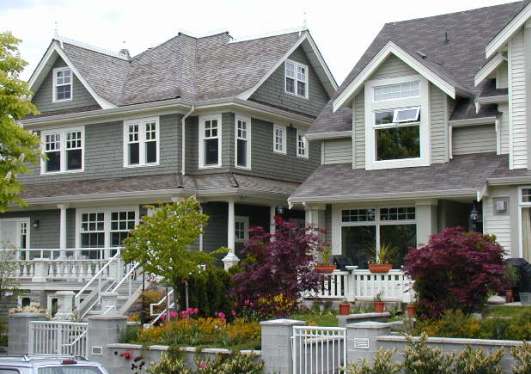
Ah, but then there’s loss of ‘green space.’ Gotcha.
There’s no point trying to avoid the trade-offs necessary in considering the changes that will come with Ecodensity. The first step, though, is deciding whether they are necessary and defensible. The case for one-planet living must be constantly made and affirmed as both do-able and desirable. If the communities affected are partners in the process, then there’s a good chance of success. As CityPlan has demonstrated, it can be done.
I’m waiting to see whether those who have been arguing for more decisive leadership on sustainability will step up to defend Ecodensity – particularly those on the Left who have been arguing that it is just a limp repackaging of existing policy and that even more must be done.
However, if the proponents for the status quo, the ecodenialists, gain some traction, then clearly Ecodensity has substance. Why else try to fight it?
Those who claim to support sustainable development (emphasis on the latter) have to make a choice: come to Ecodensity’s defense, or passively wait to see whether Sullivan and the NPA Council will be punished for pushing forward. That gives them the option to come out and shoot the wounded, even if it means the momentum for change will be lost.





The CD-1 townhouse development at 39th and Dunbar was approved unanimously by Council on May 15.
http://vancouver.ca/ctyclerk/cclerk/20070515/documents/phmin.pdf
If there’s one thing that living in Japan for 3 years taught me, it’s that density can be a great thing. And although I cringe at the term “eco-density” as a misleading label, I think that “density” is the best fix we can for in these times of unlimited growth. Modern humans have it in our nature to destroy the natural environment around us, and “eco-density” seeks to deny that reality by saying that we can have our nature cake and eat it too. This denies the reality that the natural world can not survive as it is in and among human habitat. However, simple “density”, done well, can minimize our impact on the environment and hopefully save our planet from further destruction at our hands.
That said, I’ll take eco-density over whatever else is being served up these days.
Gord, this is very well put. While the criticisms of Ecodensity (I don’t dislike this label…It’s just branding after all, a way to package up the concept of density and sustainability as one) are diverse, I sum them as follows:
– West side, don’t you dare sub-divide my 50′ of frontage
– East side, don’t you dare assess my property based on higher density zoning and deny me more amenities while you’re at it
ALL of them a concerned about too many cars taking up street parking, and many of them see this as a win for developers not the communities themselves.
We should not dismiss these concerns. We should heed them and provide answers.
Cheeying’s Op-Ed will help, as will your comments. But the city has been tasked with consulting with communities about Ecodensity, and to put it mildly, they have much more work to do.
People in my neighbourhood around Fraser Street are basically in the dark about what the E word means, yet we would probably benefit from this initiative the most.
Thanks again for your reality check here. And nice work on the 6 o’clock news tonight 🙂
Well put, density doesn’t necessarily mean glass towers. The Plateau Mont-Royal borough in Montreal serves as a example of livable densities. Buildings over 3 stories are quite rare. Laneway houses exist. And while Montreal is often faulted for its low amounts of green space, the city is slowly adding green space where derelict and abandoned buildings once stood.
i agree, living in the norquay village area, I am for the changes eco-density would bring but I hear alot of complaints from neighbours who really don’t understand what it would do. I think the city could do alot more to educate the people.
PS make all multifamily homes provide their own parking, It would be wonderful if street parking was kept to a minimal. Also have all developments include some greenspace that could serve their own habitants. This cuts back on the amount of parkspace the city would need to provide.
New multifamily building do require parking – it is only the 1960s apartment blocks that don’t have enough parking. (Apart from residnets who think their car is safer on the street than in an underground parkade).
I should’ve clarified, I meant to say underground parking, thus freeing up space for greenspace, while also reducing street parking.
City council just approved a 16-unit townhouse development at the southeast corner of Granville and 16th, at the edge of Shaughnessy.